
How clearer court processes help children and families find stability



New Allies, an initiative of Youth Villages, is working with courts and child welfare agencies to bring greater clarity and consistency to these processes. The goal is not to alter judicial authority but to support shared expectations and provide a more predictable path through the system for families.
“Courts are a critical partner in child welfare,” said Britany Binkowski, director of New Allies. “When expectations are clear, workers are better prepared, judges have stronger information before them, and families experience fewer delays and less confusion during an already difficult time.”
Supporting judicial leadership in Mississippi
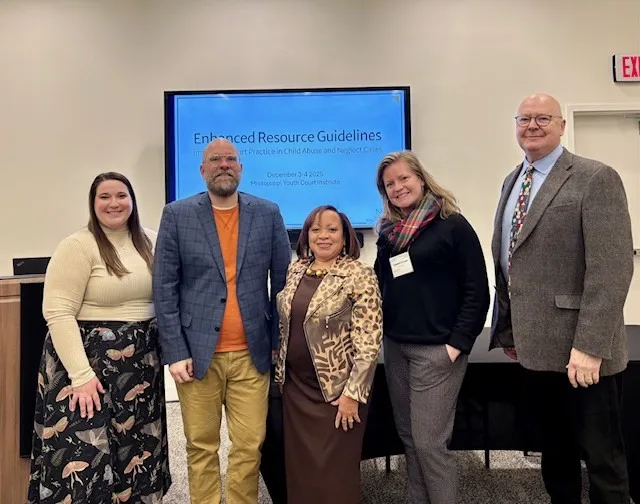
In Mississippi, New Allies has partnered with youth courts to strengthen their role in child welfare decision-making. With grant funding and technical assistance, New Allies launched the Mississippi Youth Court Institute in collaboration with the National Council of Juvenile and Family Court Judges. The institute supports youth court judges in applying best practices in child welfare decision-making, safety, permanency and family engagement.
Mississippi’s youth courts carry significant responsibility with often limited resources. By pairing targeted funding with ongoing education and peer learning, the institute supports judges in strengthening leadership and fostering shared learning across courts.
Improving day-to-day court navigation in Kentucky
In Kentucky, New Allies’ work focuses on how frontline staff experience the court process. In the Northern Bluegrass Region, child welfare staff work across 12 county courts, each with distinct procedures, timelines and informal expectations. That variation can make it difficult for workers to feel confident and prepared, and it can result in different experiences for families depending on where a case is heard.
To address this, New Allies partnered with regional leadership to review court processes and translate them into a practical, usable resource for staff. The tool clarifies what each hearing entails, when it should occur, what documentation is required and how workers should communicate with attorneys, clerks and judges.
Rather than relying on institutional memory or trial and error, staff now have access to clear, county-specific guidance. Stronger preparation supports more efficient court interactions and helps families better understand what to expect as their case progresses.
Why this work matters
Court processes have real consequences for children and families. When expectations are unclear or practices vary, cases can stall, families face added stress and staff struggle to move work forward efficiently.
Across Mississippi and Kentucky, New Allies’ work is focused on making the court process easier to navigate. Clearer expectations help staff prepare, support judges in making timely decisions and give families a better understanding of what lies ahead. Over time, that consistency can help children reach stability sooner.
To learn more about New Allies’ work with courts and child welfare systems, email our team.
Share on Social