
Investing in modern technology to strengthen outcomes for young adults exiting foster care



Modernizing child welfare systems is not a partisan issue. Across administrations, there has been growing recognition that outdated technology can slow down frontline work and limit the impact agencies have on young people and families.
Federal leaders spotlight technology
Recent federal actions have reinforced that focus. On Nov. 13, 2025, President Trump signed the executive order Fostering the Future for American Children and Families, which calls for improving outcomes for young people in foster care and those transitioning to adulthood through updated systems, stronger partnerships and modernized data infrastructure.
Five days later, the U.S. House of Representatives’ Ways and Means Committee held a hearing titled “Leaving the Sticky Notes Behind: Harnessing Innovation and New Technology to Help America’s Foster Youth Succeed.” Lawmakers and witnesses discussed how technology can reduce administrative burdens, strengthen coordination and help agencies better support young people exiting foster care.
Throughout the testimony, speakers emphasized that innovation should not replace relationships but strengthen them. They noted that technology can reduce time spent navigating outdated systems and increase time spent engaging directly with young people and families.
Martin Elisco, CEO and co-founder of Augintel, described the daily reality for many frontline professionals.
Child welfare workers are some of the most dedicated professionals in government but are constantly stymied with too much administrative work and too little insight into the needs and histories of those they care for. Caseworkers spend hours each day navigating outdated technology or piecing together information, rather than engaging with families.
Dr. Jennifer Jacobs, CEO and co-founder of Connect Our Kids, echoed that sentiment.
“Technology and AI can do the things that take time away from humans being human,” Jacobs said. “If technology can take on that burden, it allows caseworkers, foster parents, biological parents and kin to focus on being the human network children need.”
How technology supports frontline practice
That same theme was reflected in testimony from Lasheunda Carr, a case specialist at Lawrence Hall in Chicago, a Youth Villages implementing partner that delivers the LifeSet model. Carr described how modern tools can strengthen practice with older youth preparing for adulthood.
“A key component of the LifeSet model is an innovative piece of technology and support that allows us to serve young people more effectively: GuideTree,” Carr said. “Its newest feature, FindHelp, lets us instantly locate local resources for housing, employment, mental health and more by entering a ZIP code.”
Built for daily casework
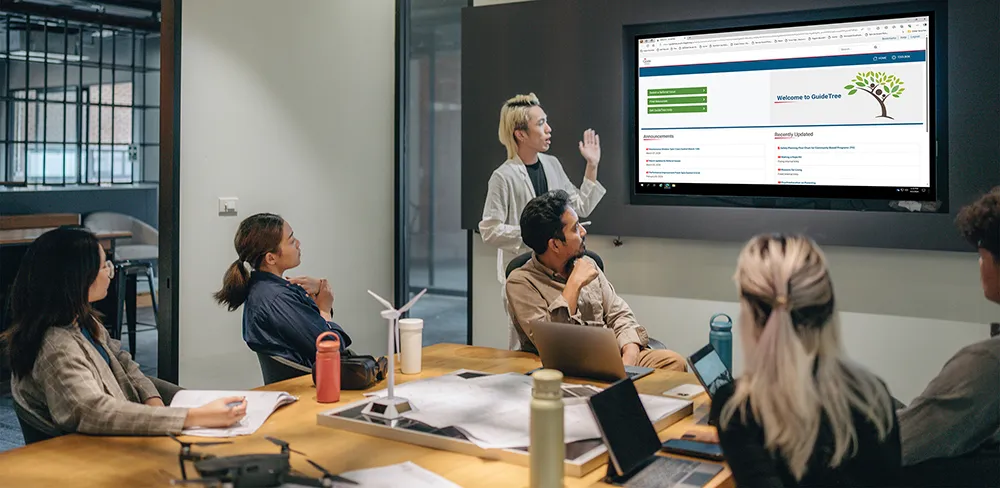
GuideTree is a workforce training and development approach developed by Youth Villages. It combines structured case conceptualization, curated evidence-based resources and practical guidance to support consistent, high-quality service delivery. Designed to integrate into daily case work and supervision, it helps staff analyze complex cases, select effective interventions and track progress over time.
Recent pilots demonstrated measurable impact. At one site, 88% of staff reported improved use of interventions; 71% reported stronger delivery skills; and 53% reported increased job satisfaction. A residential pilot reported fewer serious incidents and improved youth engagement. An independent evaluation by the University of Connecticut found improvements in staff critical thinking, use of evidence-based practices and intervention planning.
Expanding access to GuideTree
To expand access, Youth Villages is accepting applications for its GuideTree Early Adopter Grant, supported by philanthropic funding. The grant covers initial planning and training costs for organizations joining the inaugural cohort, which launches in summer 2026. Ongoing implementation costs remain the responsibility of participating agencies.
Eligible applicants include public child welfare agencies, private nonprofit organizations that support older youth and managed care organizations that work with foster care providers. Applications will be accepted through April 30, 2026.
As federal leaders, state agencies and service providers continue to explore modernization, the conversation remains the same: strong relationships drive outcomes, and modern systems can help professionals spend more time building them.
For more information about GuideTree and the Early Adopter Grant, contact our team.
Share on Social