
Michalann, Dylan and Charissa show the ways former foster youth are influencing positive system change



Young people with lived experience in foster care have been a force for positive change in child welfare policy for decades, with deep impact that traces back to the lobbying effort that led to the passage by Congress of the pivotal Chafee Foster Care Independence Program in 1999.
Now, hundreds of young people – recognized as lived experience experts – are taking their places at policymaking tables at local, state and federal levels, guiding policy for systems and organizations across the country.
Michalann, Dylan and Charissa show the impact young people are making when they have a seat at policymaking tables and use their voices and experience to advocate for improvements in transition-age youth services and the lives of children in foster care now.
Turning pain into passion
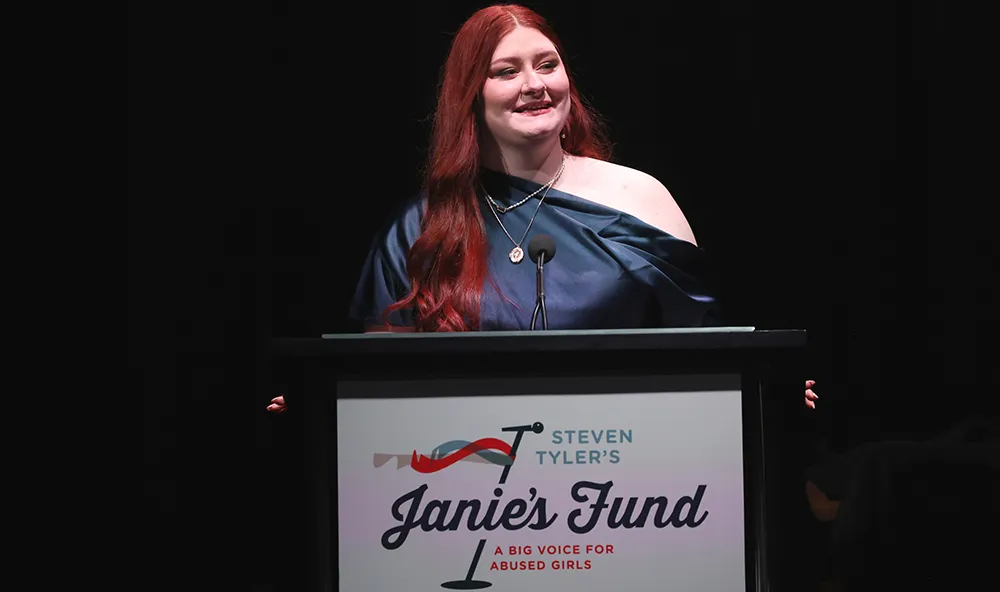
The event raised $4.1 million for Janie’s Fund, the philanthropic partnership between Tyler and Youth Villages. The donations support young women in the LifeSet program, an evidence-based bridge to adulthood for transition-age youth and will help build three new Janie’s Houses on Youth Villages’ Inner Harbour campus in Georgia to help girls overcome the mental and behavioral effects of trauma.
Michalann told the star-studded audience the 10 years she spent in foster care were about survival.
“I learned to stay quiet, not take up space, and do whatever I could to keep a bed for one more night because that was the only way I could guarantee stability,” she said.
After foster care, her life expanded.
I’m no longer sitting in scared silence but using my voice to advocate for young people in foster care, especially in Oklahoma.
While speaking at fundraising events is a common role for young people, many like Michalann deepen their impact through additional roles. She is a staff member at the Oklahoma Successful Adulthood Program, a leader of the Oklahoma Youth Advisory Board and a powerful advocate for extended foster care (EFC).
The day after the gala, Michalann flew cross-country from Los Angeles to Washington, D.C., to participate in important meetings as the administration works to strengthen services for transition-age youth through the implementation of the Fostering the Future Executive Order.
Guiding the organizations that once helped them
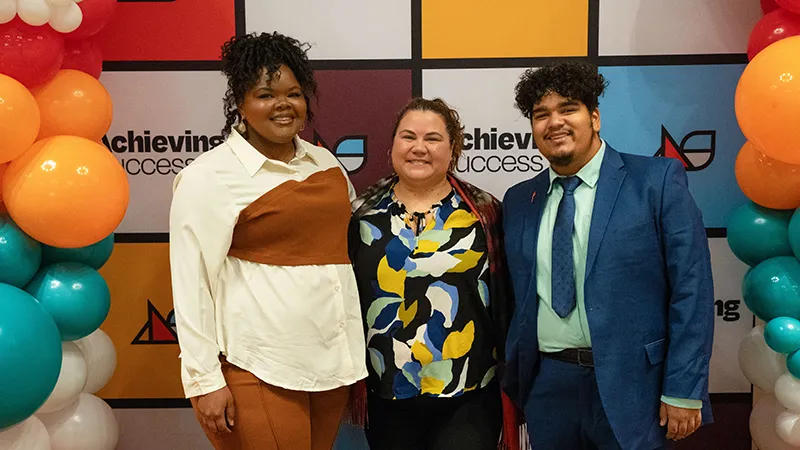
(L to R) Mariah Hunt, April Curtis, board chair and cofounder of Foster Care Alumni of America, and Dylan Evans at an Achieving Success Convening. Dylan and Mariah are members of the Youth Villages Lived Experience Corps.
Like Michalann, Dylan is a Youth Villages Scholar, a participant in LifeSet and a member of the organization’s Lived Experience Corps, a group of young adults who advise on policy and programs and advocate for system change across the country.
Dylan, who aged out of foster care in North Carolina, completed an internship with the Congressional Coalition on Adoption Institute last summer, focusing on policy reform related to the Family First Prevention Services Act (FFPSA) and the reauthorization of Title IV-B.
When it came time for Youth Villages to develop a new five-year strategic plan with the Bridgespan Group, Catherine Smith, chief strategy officer for Youth Villages, wanted the voices of all stakeholders included — especially those of young people with lived experience. She tapped Dylan to be a key participant in the process.
“I was excited because it showed Youth Villages really wanted to listen to the people it serves,” Dylan said.
He joined the plan’s core working group, made up of senior leaders, frontline staff and lived experience experts. From October 2024 through March 2025, the group was charged with answering key questions to determine the organization’s goals and priorities.
The resulting plan will drive Youth Villages toward increased growth, impact and service in the next five years.
“The plan is the hallmark of an organization truly looking inward and wanting to see how we can best set ourselves up for the future so the organization can grow, and the people we’re serving can thrive,” he said.
Building a ‘playbook’ for national change
Helping young adults who leave foster care at 18 thrive, not just survive, is the goal of the eight lived experience experts who joined the National Collaborative for Transition-Age Youth in 2023. They brought experience in systems across the country, including California, Florida, Washington, Kansas, Michigan, New Hampshire, Utah and Washington.
The national collaborative, launched by Foster Club, the American Public Human Services Association (APHSA) and Youth Villages, brings together lived experts, state and local child welfare policymakers and national advocates to find solutions to challenges still facing young people who age out of care 25 years after Chafee brought federal spending and programs to states.
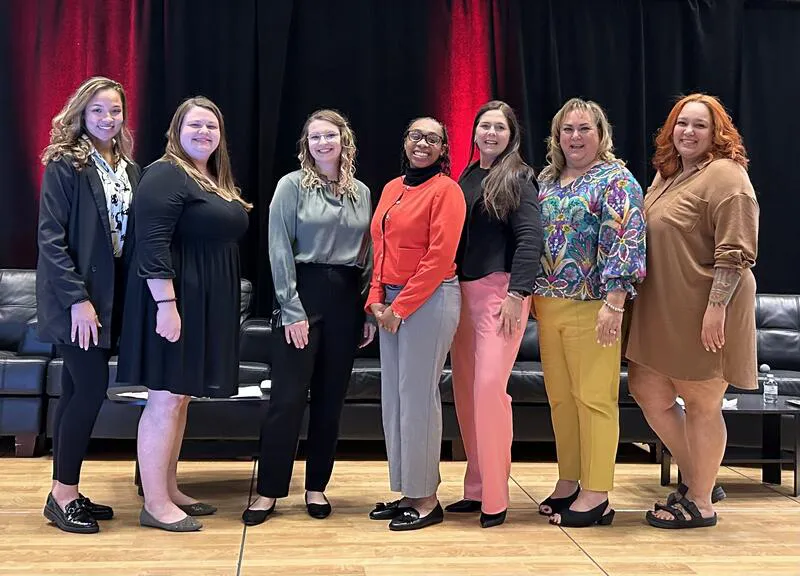
(L to R) Charissa, third from left, joined other lived experts and National Collaborative for Transition-Age Youth members to present the Playbook of Best Practices as part of a CWLA conference last year. From left are Julia Mueller, APHSA, Meg Dygert, APHSA, Charissa, Lived Expert, Knowledge, Lived Expert, Sarah Goad, Michigan, Barbara Guillen, Arizona, Ivy-Marie Washington, APHSA.
Charissa joined the national collaborative with 13 years of lived experience in the child welfare system and a history of advocacy in Washington state and nationally.
She says her experience working to produce the national collaborative’s first publication –“Improving Outcomes for Young Adults and the Systems that Serve Them: A Playbook of Best Practices,” — was unique.
She participated in the in-person and virtual convenings that shaped the recommendations and helped write the document.
“For me, the most meaningful part of writing this playbook was seeing how powerful it is when lived experience and professional expertise are treated as equally necessary,” Charissa said. “When those perspectives come together, the conversation shifts. We stop asking why individuals fail and start asking how individuals and systems can succeed together.”
The lived experts on the national collaborative are now working to expand the playbook’s impact by participating in webinars, legislative briefings and media engagement.
If you would like more information about the playbook or to register for webinars and briefings related to it, email our team. The playbook can be downloaded here.
Share on Social